Blog
Michael Phelps’ “Eastern Secret”: How Traditional Chinese Medicine Cupping Can Help him Roar in the Pool?
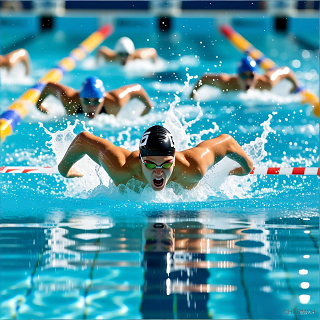
At the swimming pool of the 2016 Rio Olympics, Michael Phelps, the “flying fish” holding 23 Olympic gold medals, not only achieved record breaking results, but also had several prominent purple red circular marks on his shoulders and back, which became a “puzzle” in the global media’s attention – foreign journalists curiously guessed that it was the “mark left by the octopus suction cup”, while Chinese audiences recognized it at a glance: it was the mark of traditional Chinese medicine therapy “cupping”.
Nowadays, this health care method originated in China more than 2000 years ago has not only become a “secret weapon” for top athletes such as Phelps to relieve training fatigue, but also opened a door for ordinary people who crave easy health care to understand the wisdom of Eastern health.
From Olympic legend to spokesperson for traditional Chinese medicine
When he competed in Rio de Janeiro in 2016, the 31 year old Phelps had been using cupping therapy to regulate his body for over two years. In an interview after the game, he made no secret of his dependence on this therapy: “After high-intensity training every day, my muscles ache as if they have been injected with lead, and cupping is like ‘loosening’ my body – after pulling it out before the game, the sore parts immediately feel relaxed, and the purple marks you see happen to grow in my most painful areas.
This therapy that benefited him was also included in his personal documentary ‘Rule Yourself’. In front of the camera, he bluntly stated that cupping is the key to “controlling the body’s state and coping with high-intensity events”: “It is not like painkillers that can only temporarily cover up pain, but can truly relax the body and prepare for the next training.
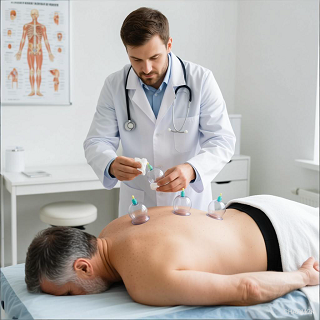
With Phelps’ promotion, cupping quickly became popular in the international sports circle. American gymnastics star Alex Nadu even spent $15 on Amazon to buy a set of home cupping machines to operate by himself, and shared his experience on social media: “This is 10 times more effective than the therapy I spent hundreds of dollars on before, and now it has become a necessary recovery item for me after training.”
In addition, swimming star Natalie Coughlin, Hollywood actress Jennifer Aniston, and others have also shared photos of cupping marks on their shoulders. Even the US Embassy in China joked on its official platform, “It seems that American athletes are relying on traditional Chinese medicine methods to maintain their best condition.
Not just cupping: more ways to open up traditional Chinese medicine health care
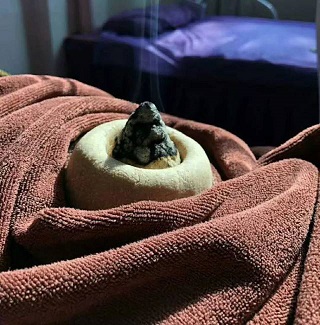
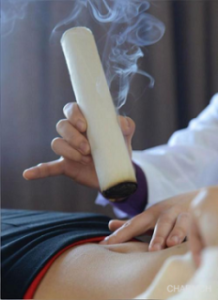
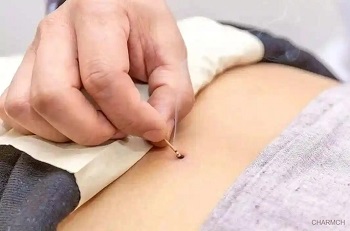
In addition to cupping, Phelps’ rehabilitation team will also use acupuncture and moxibustion, moxibustion and other Chinese medicine therapies. However, for ordinary people, there is no need to pursue complex methods. These simplified versions of traditional Chinese medicine health care methods are easier to adhere to and have significant effects.
From the “mysterious imprint” on the Rio Olympics to the globally popular daily health care methods, Phelps’ experience actually proves one thing: the wisdom of traditional Chinese medicine is not a niche “folk remedy”, but a body adjustment plan that has been practiced for thousands of years and is suitable for ordinary people.
The next time you feel muscle soreness and physical fatigue, why not try this Eastern therapy that has been validated by Olympic champions – perhaps you will fall in love with the feeling of “bringing your body back to ease” like Phelps.